Switching from wood to gas changes what goes up a chimney, but it does nothing about what comes down. Winter storms still hit the top of the stack, and Riverside's dry summers and Santa Ana winds still work on the crown and flashing the rest of the year. What does change is the cost of ignoring a leak: water that once dried out in a hot wood flue now drips onto a steel insert or a gas valve. This post covers the top-of-chimney work that most often joins a gas conversion, and the prices on our list.
Why water matters more once gas is in
A wood fire dries the flue every time it burns. A gas appliance runs cooler and its vent is sealed, so water that gets past the top has nowhere to go but down. On an insert it lands on the top of the box and the vent connection. On a log set it runs into the burner pan and the valve. Rust on an insert body or a corroded gas valve turns a small leak into a repair on the appliance itself. That is why we look at the top of the chimney on every conversion, not just the fireplace.
Four fixes and what sets each price
Three of the fixes that come up most often on gas chimneys carry a price on our list. The cap is quoted after we measure.
- Leak traced to its source and repaired, roof to firebox: $550 to $3,300
- Cricket framed above the chimney to split runoff: $440 to $990
- Diverter plus new metal at the roof line, all four sides: $660 to $1,650
- Cap over the flue or vent, fitted and fastened: quoted after we measure
The spread in each price comes from chimney size, roof pitch and material, and how many places water is getting in. Your quote gives one figure for your chimney, in writing, before work starts.
Leaks: finding the right one
Most leaks we see on converted chimneys come from one of three places: the metal where the roof meets the brick, cracks in the crown, or a missing or ill-fitted cap. Some come from the brick itself soaking up rain. A leak repair starts by finding which, because sealing the wrong spot leaves the real one dripping. We look from the roof, from the attic where there is access, and with the camera where needed. The chimney leak repair page covers the service.
Caps on a gas chimney
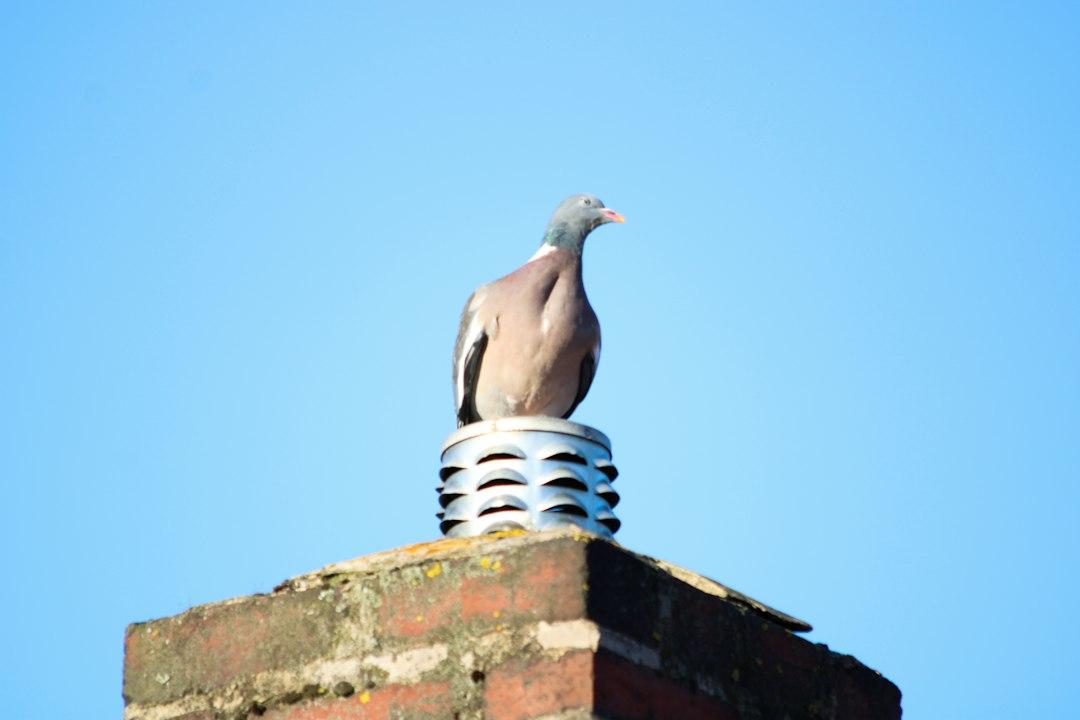
On an insert, the stainless vent ends in its own cap, but the rest of the flue opening also needs closing, usually with a top plate and a cap over it. On a log set, the whole flue still carries exhaust, so a full cap with screen keeps out rain and birds while letting the gas exhaust out freely. A cap is quoted after we measure. A small single-flue cap is the simplest job; a custom cover over several flues on a large chimney costs the most. If another fireplace in the house still burns wood, its cap needs a spark screen as well, which counts for more here in Santa Ana season when embers travel. See chimney cap installation.
Crowns and chase covers
Brick chimneys finish in a crown, a poured or troweled cap sealing the top. In inland heat and winter rain it cracks, and those cracks let water straight into the brick. Crown work has no fixed figure on our list; it is priced from what we find. The chimney crown repair page explains the options.
Some Riverside homes built from the 1980s on have a metal factory-built chimney inside a framed, stucco box. A metal lid caps that box, and once it rusts through or dips, rain collects there and drains inside, onto the framing and the fireplace below. A replacement is priced after measuring; see chimney chase cover.
Crickets and flashing
A cricket, or diverter, is a small sloped structure on the uphill side of a chimney that steers water around it instead of letting it pool against the brick. On wider chimneys it is often the difference between a dry attic and a stained ceiling. Flashing is the metal at the roof line that keeps water from running in between roof and brick. When the flashing is old, we usually replace it at the same time as building the diverter, which is why the two appear together on our list.
To get a figure for your chimney, use the quote form: say whether the fireplace is already on gas or about to be, where you have noticed water, and whether it shows after every storm or only heavy ones. We call back to set up a roof visit and send the quote in writing.
Waterproofing the brick
Where the brick itself is soaking water, a breathable sealer applied after the other repairs keeps rain out without trapping moisture inside. It only goes on once the crown, cap and flashing are sound. That service is described on our chimney waterproofing page.
Doing it with the conversion
If you are about to fit an insert or logs, the sensible moment for this work is before or alongside the appliance. The roof is already being accessed for the vent, and fixing a leak after a new insert is in means working around new equipment. We price both on one quote. For the appliance side, see our insert price breakdown and our post on liners for gas conversions.
Where we work
We handle caps, leaks and crowns on gas chimneys across Riverside, Yorba Linda, Brea and Claremont. The prices above are the same in each, and one roof visit can price every item together.
If water is finding its way down a chimney that now runs on gas, the contact page is the quickest way to get it in front of us.
Ready for a Look at Your Flue?
Easley Chimney Contractors works out of Riverside. We check the chimney, then lay out gas logs, an insert or a direct-vent unit, whichever the house can take, each with its own figure.